The (First) Great Train Robbery / La Grande Attaque du Train d’Or / Der Grobe Eisenbahnraub (1979)


“In 1855, England and France were at war with Russia in the Crimea. The English troops were paid in gold once a month $25, 000 in gold was loaded into strongboxes inside the London bank of Huddleston and Bradford and taken by trusted armed guards to the railway station. The convoy followed in fixed route of timetable.
The gold was loaded into luggage van of the Folkestone train for shipment to the coast and from there to the Crimea...
… The presence of so much gold in one place aroused the interested of the English criminal elements, but in 1855 there had never been a robbery from a moving railway train...”.


That is the prologue of the fourth film directed by the prolific writer/ screenwriter / director / film producer Michael Crichton (“Westworld” (1973) ; “Coma” (1978) ; “Rising Sun” (1993)). This is also the first time that he wrote himself the film adaptation for the screen from one of his bestselling novel “The Great Train Robbery” (1975) based on a true story.

Still today, it is very surprising that the writer of so many anticipation novels like “Jurassic Park” was interested in exploring the wonderfully grungy Dickensian world. In any case, he succeeded very well as both screenwriter and director. I only regret that he didn’t write a sequel to this story. “The Great Train…” remains one of the most ironic, funniest and vivid heroic adventure film which took place in the glorious Victorian period of the British history. That’s why, it is one of my favorite movies.


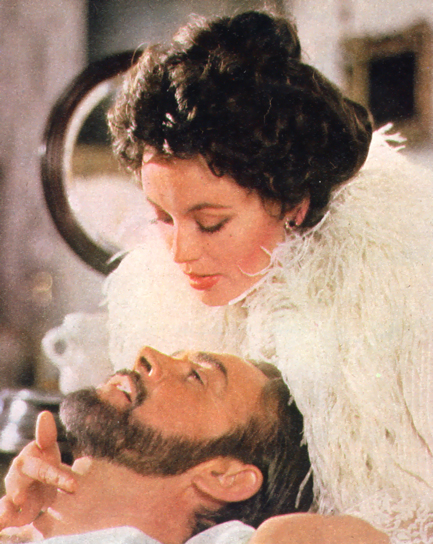
The Story : In 1855, Edward Pierce (Sir Sean Connery), a charismatic and well-established member of  the London’s high society, but also an opportunistic and cynical master thief, makes plans to steal a shipment of gold being transported monthly from London to finance the Crimean War. To help him in this task, Pierce recruits Robert Agar (Donald Sutherland), a pickpocket and screwsman and Pierce's mistress Miriam (Lesley-Anne Down), a beautiful actress, joined in on the plot. They will constantly adjust their plan in order to cope with unexpected and seemingly insurmountable difficulties to steal the gold…


Agar (Donald Sutherland) and Sir Edward Pierce (Sir Sean Connery)


In 1978, Crichton and the producer Carl Foreman (“The Man Who would Be King” 1972 / See the topic) asked to the famous Scottish origin actor, Sir Sean Connery to portray Edward Pierce the aristocratic clever leader of the team thieves. He was joined by the very popular and respected Donald Sutherland (“M.A.S.H.” (1970), “Don’t Look Now” (1973), “Eye of The Needle” (1978)) for the part of Agar, the expert “screwsman”.

The Gorgeous Ms Miriam (Lesley-Anne Down)

To Portray, Ms Miriam, the first choice of the producers was the distinguished Jacqueline Bisset but it was the talented Lesley-Anne Down (“Hanover Street” (1979), “Rough Cut” (1980) and “Nomads” (1986)) who obtained the part. For the gorgeous British actress, this movie was one of her greatest part on the big screen before “Sphinx” (1981).


With the help of the famous Italian producer, Dino De Laurentis and United Artist Studios, Foreman gathered $6 millions to complete the budget of the  movie. The Acclaimed Geoffrey Unsworth, the legendary cinematographer (“2001: A Space Odyssey” (1968), “Cromwell” (1970) and “Tess” (1979)), the great production designer Maurice Carter (“Becket” (1964), “Battle of Britain” (1969)) and the talented costume designer Anthony Mendleson (“Billy Budd” (1962),”The Long Ships” (1964), “The Boys from Brazil” 1978)) were choosen by the producers.


The film was shot mostly on location in Ireland and at London’s spacious Pinewood Studios. It was photographed in Panavision / Technicolor and was one of the first movies recorded in Dolby Stereophonic sound.


The prolific and legendary American composer, Jerry Goldsmith, wrote the score. Four times, he worked with Michael Crichton and “The Great Train…” marked their third collaboration (“Pursuit” / “Binary” (1972), “Coma” (1978) and “Runaway” (1984)).

The Composer Jerry Goldsmith

It is one of his most beautiful and energetic soundtrack that he ever composed for the screen. Each time, I hear the track called “The Gold Arrives” I remind the heroic moment in which Sir Sean Connery was climbing on the roof of the train. For me, this short piece of music is definitively sticking to the pictures of that incredible sequence forever. A great scene, a great music…


"The Gold Arrives"


Also, special mentions must be given to his old friend and collaborator, the orchestrator Arthur Morton and to the National Symphony Orchestra that performed the whole musical score at its best.


Suite from the Original Score


Without any doubt, Jerry Goldsmith took a very great pleasure to work on that film. For those who could be interested, in 2011, the Intrada label produced a new CD album which contains the complete original score with the original 1979 soundtrack Album.


“No respectable gentleman is that respectable”.

Once again, Sir Sean Connery gave an outstanding performance. He worked very carefully with the director Michael Crichton to improve the script before the shooting. He was so involved in the movie that he decided to perform himself most of the stunts and especially for the extended sequence on top of the moving train. A great performance, for a man who was just about his fifties !


Donald Sutherland gave also a very funny and perfect performance in the part of Agar, the expert at the picking pocket and locks. In this movie, he was a very fine accomplice to Connery’s character with a great sense of humor.


For her first major role, Lesley-Anne Down gave a very elegant and delicate performance. Face to the two other leading roles, she succeeded to play the Edward Pierce’s mistress (Sean Connery) with a lot of humor and sensuality. Probably, with “Sphinx”, “The Great Train…” is her best part and she remains, with the Bond girls, one of the sexiest ladies ever to share the screen with Connery.

The Crichton’s movie received very good responses from the critics but not from the audience. Despite his colossal efforts, Sir Sean Connery was very disappointed by the bad results to the US box-office (less than $5 millions) and, at the time, he told that the United Artist studios didn’t support the movie as it should have deserved with a very a large and aggressive advertising campaign. Finally, the producers won more than $12 millions !


In 1980, Michael Crichton won the Edgar Award (Edgar Allan Poe Award) for Best Motion Picture Screenplay and Geoffrey Unsworth, earned a BAFTA nomination for best cinematography.

In respect to his memory, the producers decided to dedicate the film to the great British cameraman, Geoffrey Unsworth, who died a couple of months after the ending of the shooting.

“The Great Train Robbery” remains a very good picture and I regard it as a masterpiece of fun and excitement entertainment with a lot of suspense. It makes me to think about another fine hold up movie : “Jules Dassin’s Topkapi”.


“Now, on the matter of motive, we ask you : why did you conceive, plan and execute this dastardly and scandalous crime ? “ ... “I wanted the money !”

 The Movie Trailer


The Original 1979 LP Soundtrack Album (Back Cover)
 

End Title - Piano Version
 
 
P. S. : If you want to know more about “The (First) Great Train Robbery”, please refer to :
·        Books :
“The (First) Great Train Robbery” by Michael Crichton (in English) ; 1975 ; Knopf, New York ; Or Triad Panther Edition (Paperback), USA.

“Un Train d’or pour la Crimée” by Michael Crichton (In French) ; 1999 ; Pocket Edition, France.

“The (First) Great Train Robbery” , the UK Exhibitor’s Campaign Book (In English) ; 1979 ; United Artist Corporation Ltd, London, UK.

“The Films of Sean Connery” by Lee Pfeiffer and Philip Lisa (In English) ; 1997 ; Citadel Press Book, USA.

“Sean Connery : The Measure of Man” Christopher Bray (In English) ; 2010 ; Faber and Faber, UK.

·        Video :
“The (First) Great Train Robbery” by Michael Crichton ; 2001 ; MGM/UA - US DVD Zone 1 ; Ref. N°907149 ; Widescreen Edition with an audio Commentary by M. Crichton.

·        Music :
Double CD Album of “The Great Train Robbery” by Jerry Goldsmith ; 2011 ; MAF 7115. (http://store.intrada.com/s.nl/it.A/id.7372/.f)

·        Websites :
Sean Connery Official Website

Official Lesley-Anne Down Website

Official Michael Crichton Website

Official Jerry Goldsmith Website


Here are some stills from my collection :


Somewhere in Time / Quelque part dans le temps (1980)


Christopher Reeve and Jane Seymour


In 1972, a college theater student Richard Collier (Christopher Reeve) is celebrating his debut as a play writer. During the celebration, he is approached by an old woman (Susan French) who places a pocket watch in his hand and pleads "come back to me"… This is the very strange beginning of one the audacious movie I have ever seen : “Somewhere in Time” (1980).


Before to be regarded in our days, alike a cult film, “Somewhere in Time” was a novel named “Bid Time Return” (1975) written by the great American author and screenwriter, Richard Matheson (“I am a legend” / 1954) ; « The Shrinking Man »  / 1956) …). Despite the several and fine film adaptations of the Matheson’s novels, especially about his most famous : “I am legend” (“The Last Man on Earth”  / 1964) ; “The Omega Man »  / 1971) ; “I am Omega / 2007) ; “ I am Legend”  / 2007), I think it is the best one and also a rare attempt to join two different cinematographic worlds : “Melodrama and Science Fiction”.


The Story : In 1980, Richard Collier (Christopher Reeve), a successful playwright, became enthralled, smitten by a photograph of a beautiful woman at the Grand Hotel’s museum in Michigan. He made researches and discovered that she was a famous early 20th century stage actress : “Elise McKenna” (Jane Seymour). But the most wonderful that he recognized her photograph as the elderly woman who gave him a pocket watch without telling his name during the celebration of his first play eight years before.

Then, he was so upset by this woman that he decided to hypnotize himself to travel back in time to the year 1912 and to find love with Elise. But Elise's manager, William Fawcett Robinson (Christopher Plummer), feared that the romance will threaten her career and resolved to stop him...


In 1976, the producer Stephen (Deutsch) Simon (“What dreams may come” / 1998) bought the rights of the book for the screen. Two years later, he called the French origin director, Jeannot Szwarc (“Jaws II” / 1978) ; “Enigma” / 1983) as the director for the movie. After the agreement of Universal Studio to coproduce the movie with Rastar Productions for a low budget ($5 million), Matheson wrote the screenplay with the big challenge to use the Einsteinian concept of time (travel back in time) and showed it in attractive way to the public.

The very talented actor Christopher Reeve (“Superman I” / 1978) ; “Monsignor” / 1982) ; “Deathtrap” / 1982)) took the leading role of Richard Collier. The acclaimed and gorgeous actress Jane Seymour (“Sinbad and the Eye of the Tiger » / 1975) ; “Lassiter » / 1984) portrayed Elise McKenna and the high class actor Christopher Plummer (“The Thorn Birds” (TV / 1983) ; “The Man would be King” / 1975) / see the topic…) portrayed William F. Robinson.


Four distinguished actors complete this wonderful cast, the Academy Oscar winner, Teresa Wright (“The Best Years of Our Lives » / 1946) played with sensibility the part of Elise McKenna’s confident, Laura Roberts. The Grand Hotel's venerable bellman, Arthur Biehl was played with a lot of humor by Bill Erwin (“Dennis the Menace” / 1993). Susan French (“Topaz”  / 1969) was the impressive old Elise McKenna and George Voskovec (“The Spy Who Came in from the Cold.” / 1965) portrayed with authenticity Dr. Gerard Finney, Richard collier’s college professor.

The producers also gathered a fine technical team : “The American cinematographer Isidore Mankofsky (“The Jazz Singer » / 1980), the editor Jeff Gourson (“Tron” / 1982), the veteran Art director Seymour Klate (“The Manchurian Candidate” / 1962) ; “ Centennial (TV / 1979)) and the Emmy award winner costume designer Jean-Pierre Dorleac (“The Blue Lagoon” / 1980)”.

In the summer of 1979 the movie was filmed on location at the Grand Hotel (Mackinac Island, Michigan) and Chicago,(Illinois) in Panavision, Technicolor. 


At the end of the shooting, Jane Seymour suggested to Szwarc to hire one of her friend and most successful composer, John Barry (“The last Valley” (1971 / see the topic) ; “Robin and Marian” (1976)). But the budget couldn’t afford him. Nevertheless, Seymour sent him the script. The British composer felt a great affinity for the story and accepted to write the score.

The director first wanted to use the tenth symphony of Malher but soon realized that it wasn’t appropriate to the romantic mood of the picture. Then, Barry suggested to replace it by the eighteenth variation of Sergei Rachmaninoff's Rhapsody on a Theme of Paganini which began the recurrent melody in the film. But the whole score was composed by Barry. His love theme remains one of his best creation alike “Out of Africa” (1985) or “Born Free” (1966).


The Composer John Barry

Barry explained how he composed the musical score :

Quote

“I think I‘ve had more letter about that score than any other score I’ve written… Why this music connected in that way, I don’t know… It had something to do with the time I wrote it, in that my father died, and within sixteen weeks of my father dying, my mother died, and this was the first music that I wrote after that period of time. I don’t usually get into the area of one’s direct personal life and what one is writing, but I don’t know, maybe that had something to do with shaping certain feeling in that Score”.

Unquote

Love Theme by John Barry


For the first time in his career, Barry agreed to accept a percentage on the soundtrack sales as part of his fee. It was a clever decision because the soundtrack became one of the most popular score in the soundtrack history.

The sales of the original album were so huge that in 1994, MCA released a digitally remastered, 24–Karat gold-plated compact disc album. Four years later, Varese Sarabande Label produced a new soundtrack album of the score conducted by John Debney with the Royal Scottish National Orchestra.


In my opinion, this score is one of the most successful encounter between music and cinema. I regard it like a masterpiece.


After “Superman I”, Christopher Reeve gave again a very elegant performance. He portrayed with a lot of authenticity and a great sense of humor the Richard Collier’s character. Jane Seymour gave also an outstanding performance especially in the scene when Elise reveals her love for Richard (“The man of my dreams”). The couple did very well on the screen and I deeply regret that they didn’t have the opportunity to make another movie together.


The Man of My Dreams


Christopher Plummer, like always, gave a convincing performance. He was very impressed in the part of McKenna’s manager. Despite his hostility again Reeve’s character throughout the story, Plummer succeeded to feel us that he wasn’t a conventional villain. We understand his difficulties in face of Elise / Richard‘s romance which destroys the aim of his life (to make Elise the greatest actress of the period).

Unfortunately, “Somewhere in time” didn’t become a “smash hit”. Although, it was well received during its previews (April 11th, 1980), Universal Studios first supported “The Blues Brothers” (John Landis) which came out the same week (October 3rd, 1980) with a large publicity campaign. Furthermore, an actors' strike did prevent Reeve and Seymour from promoting the film. Thus, they weren't allowed to publicize it and the critics' responses weren’t positives except in Europe and Asia. Then, “Somewhere in time” disappeared from the U. S. theatre screens in a few weeks later. But its reputation ground up and it became extremely popular all over the world (cable television and videocassette / DVD sales).

The movie received several awards (Saturn Awards for Best Costume, Best Music, and Best Fantasy Film). In France, it won the “Antenne d’Or” from the Avoriaz Festival and Jean-Pierre Dorleac received an Academy Award nomination for best Costume Design.


The Trailer


Everytime, I see “Somewhere…”, I have a great feeling of sadness because I think about of the tragic last days of Christopher Reeve who remains to me a great “Superman” in the real life.

I regard “Somewhere in time” like one of the most beautiful romance ever filmed which must be regarded on the same level as classic movies like “Gone with the Wind”, “Casablanca”, “Love Story” and “Ghost”... I hope that many of you will agree with me… 


P. S. : If you want to know more about “Somewhere in Time” (1980)”, please refer to :

·         Website :
Official “Somewhere in Time” Website ;

·         Books :
“Bid Time Return” by Richard Matheson (in English) ; 1975 ; Viking Press, New York,USA.

“Le jeune homme, la mort et le temps” by Richard Matheson (in French) ; Collection Présence du Futur, 1977 ; Edition Denoël, Paris, France.

“The Somewhere in Time Story” by Bill Shepard “(In English) ; 2007 ; The Somewhere in Time Gallery (ISBN 0-9641698-0-0), USA.

·         Music :
CD Album of “Somewhere in Time” by John Barry ; 1984 ; MCA Records DIDX 347 ; MCAD 5154.

CD Album of the rerecording of “Somewhere in Time” by John Barry ; conducted by John Debney with the Royal Scottish National Orchestra ;1988 ; Varese Sarabande Label ; VSD 5911.


"Is It You ?"